Konservasi Indonesia
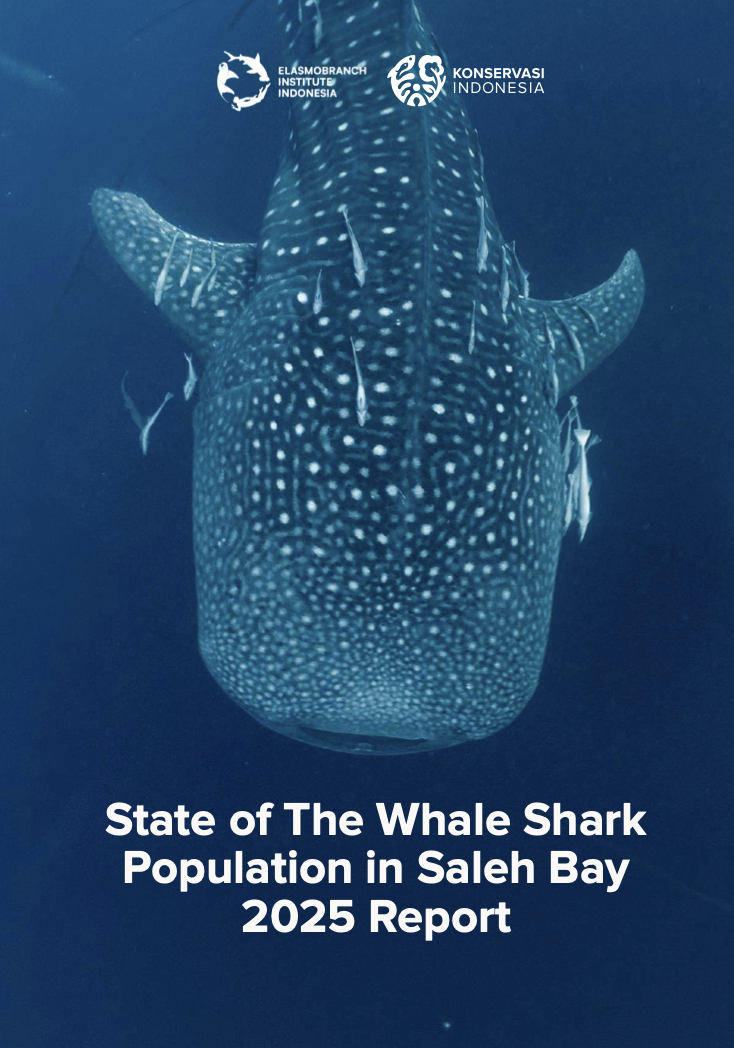
This module highlights the high biological vulnerability of whale sharks, driven by slow growth, late sexual maturity, and low reproductive rates, making the species particularly sensitive to anthropogenic pressures. Saleh Bay is identified as an important feeding habitat supported by high productivity associated with upwelling, mangroves, and nutrient inputs, thereby constituting a conservation priority area. Major threats include fisheries interactions (bycatch), vessel traffic (ship strikes), and unmanaged tourism, while protecting whale sharks delivers broader ecosystem benefits through their role as an umbrella species and nutrient transporters. These insights reinforce the urgency of science-based, species-focused conservation areas that integrate regulation of human activities with strengthened local and national policy frameworks to ensure long-term population sustainability.
Authors:
Maula Nadia, Ismail Syakurachman, Mochamad Iqbal Herwata Putra
Publisher:
Konservasi Indonesia
Keywords:
whale shark, biology and ecology, Saleh Bay, umbrella species, conservation area
Group Species:
Elasmobranch
Species:
Whale shark
Scale:
Saleh Bay
Year:
2025