Konservasi Indonesia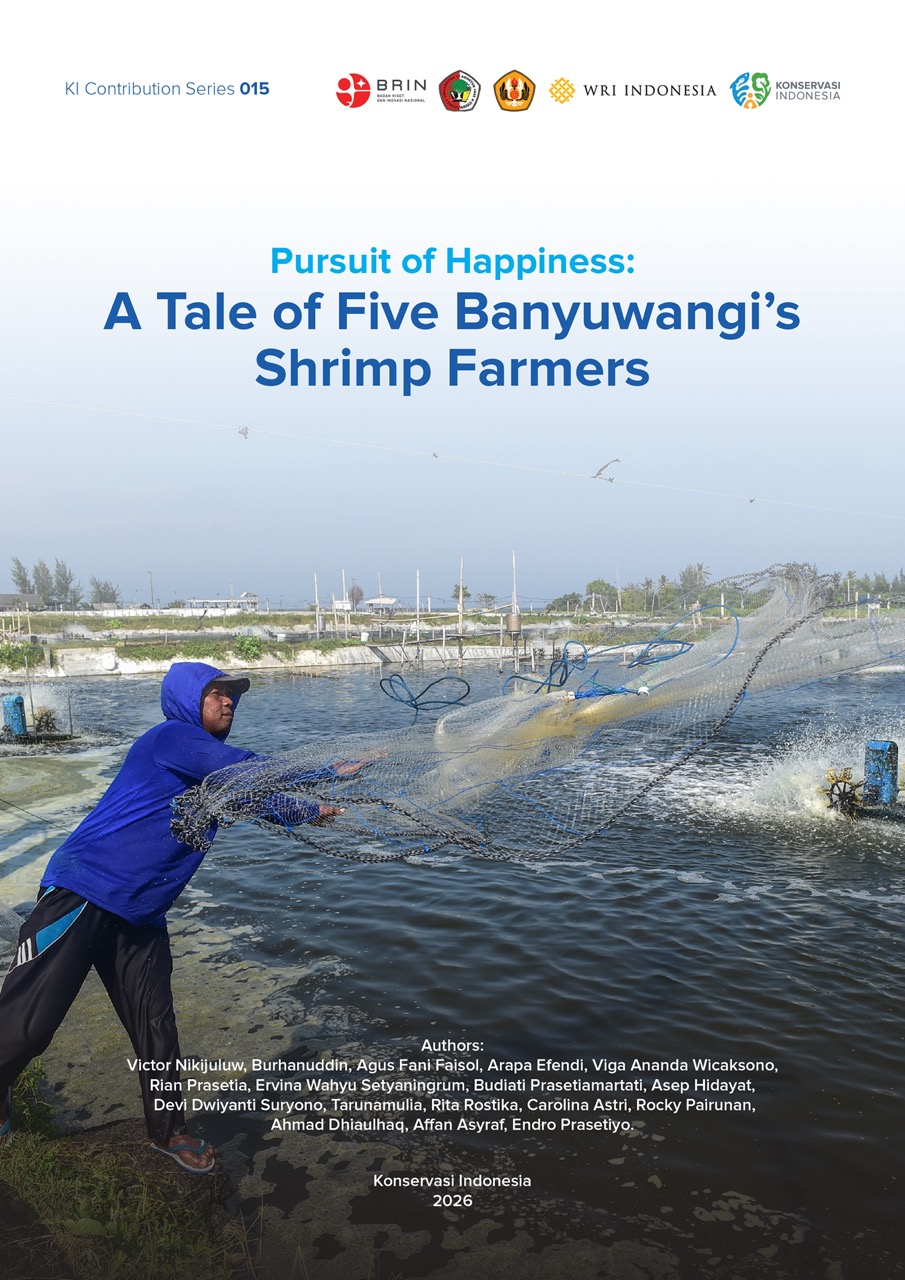
The Indonesian coastal community has a long history of practicing shrimp farming. It is one of the important economic sectors in Banyuwangi Regency. The coastal resource potential of Banyuwangi spans from the northern to the southern coastal areas of Java Island. The total area of shrimp ponds in Banyuwangi is approximately 78,000 hectares, including unused or idle areas. The active pond area, however, is about 1,383 hectares. Approximately 750 shrimp farming households are in the regency (DKP-Jatim, 2021). If one farmer has five dependents and employs two non-family laborers, then there are about 4,500 people directly relying economically on shrimp farming. Taking into account shrimp marketing, input supplying, and processing industries, the figures will expand substantially to be more than 10,000 people.
This article highlights five shrimp farmers purposively selected for the effort they have put into shrimp farming. Their journeys reveal how they have adapted to changing conditions. Through their experiences and perspectives, shrimp pond farming is shown as a pursuit of happiness and wellbeing, ranging from economic stability and business sustainability to environmental balance and peace of mind after overcoming risks.
We anticipate that the story’s presentation will offer a human perspective on economic activities in coastal areas. Furthermore, their stories can provide a deeper understanding of how policies, shrimp farming practices, and environmental conditions intertwine with the personal aspirations of shrimp farming entrepreneurs in their pursuit of better well-being and happiness.