Konservasi Indonesia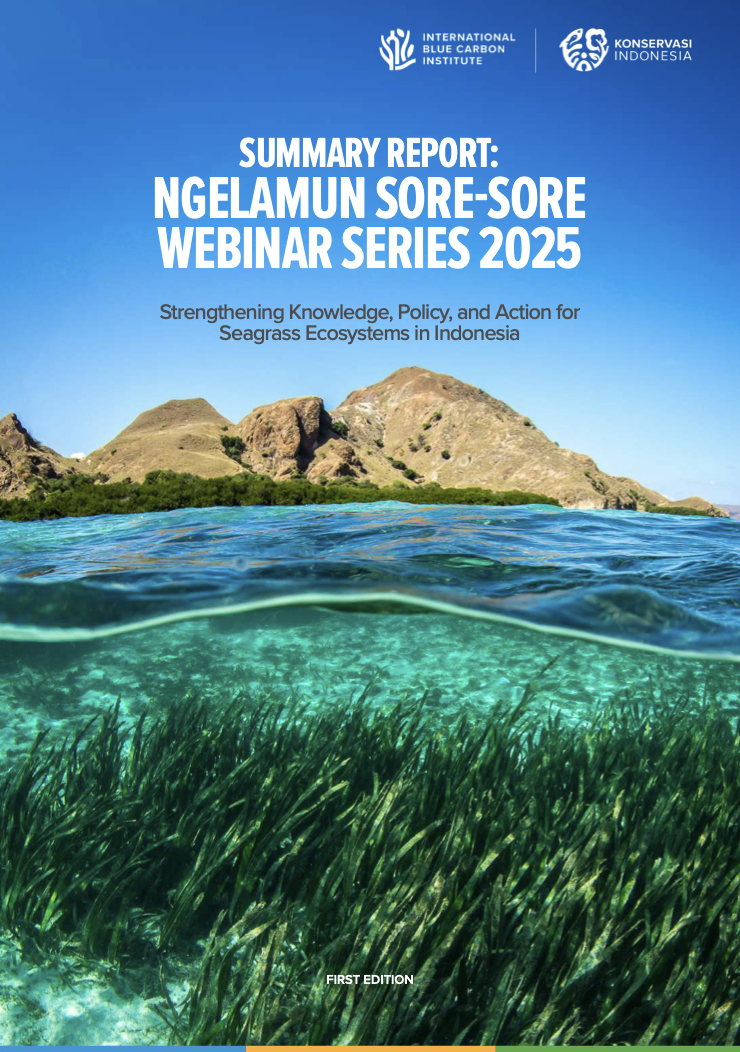
Indonesia hosts one of the world’s most extensive and diverse seagrass ecosystems. As a critical blue carbon ecosystem, seagrass plays an important role in climate change mitigation, provides habitat for diverse marine species, functions as a sediment trap, and supports nutrient cycling. However, despite their importance, seagrass ecosystems have received less attention and continue to face increasing pressures from both natural processes and human activities. This is reflected in an estimated annual decline of 3% in Indonesia’s seagrass extent between 2015 and 2021 (Rahmawati et al., 2022).
These pressures are further exacerbated by limited stakeholder awareness, insufficient data and information, and low capacity for effective protection, management, and restoration. In the context of policy development, stronger support from science and technology is required to generate evidence that can inform national policies related to seagrass blue carbon ecosystems.
In response to these challenges, NgeLamun Sore-Sore was initiated as a regular online discussion forum under the Indonesia Seagrass Scientist Network (ISSN). The webinar series provides a shared platform to discuss emerging and current issues related to seagrass ecosystems from ecological and environmental, socio-economic, and policy and institutional perspectives, while facilitating knowledge exchange and collaboration to support sustainable seagrass management.
This first edition of the summary report presents key highlights from the NgeLamun Sore-Sore Webinar Series 2025, particularly Sessions 1–5, to offer insights for practitioners, policymakers, and researchers to support the protection and management of seagrass ecosystems.