Konservasi Indonesia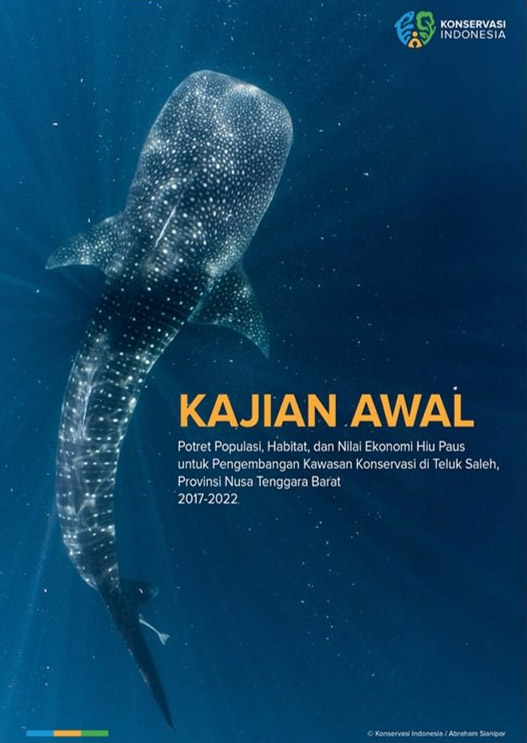
This assessment shows that Teluk Saleh is one of Indonesia’s most important year-round habitats for juvenile whale sharks (Rhincodon typus), supporting at least ~108 identified individuals and functioning as a critical feeding and developmental area driven by seasonal upwelling, mangrove productivity, and lift-net fisheries. Despite its ecological importance and an estimated economic value of ~IDR 1.2 billion per year from whale shark tourism, only ~23% of identified whale shark aggregation hotspots are currently under formal protection, leaving key habitats exposed to fisheries pressure, vessel traffic, and unmanaged tourism. The study provides a strong scientific and socio-economic basis for establishing a whale shark–based conservation area in Teluk Saleh, integrating habitat protection, sustainable ecotourism, community co-management, and long-term financing mechanisms to support both population recovery and local livelihoods.
Authors:
Mochamad Iqbal Herwata Putra, Ismail Syakurachman, Abdi Hasan, Hanggar Prasetio, I Made Sanjaya, Edy Setyawan, Budiati Prasetiamartati
Publisher:
Konservasi Indonesia
Keywords:
whale shark, population assessment, habitat use, juvenile aggregation, critical habitat, marine protected area, whale shark ecotourism, economic valuation
Group Species:
Elasmobranch
Species:
Whale shark
Scale:
Saleh Bay
Year:
2025