Konservasi Indonesia

JAKARTA, December 16, 2025 – For the first time in Indonesia, researchers have confirmed the discovery of a neonatal whale shark in the wild, measuring only about 135–145 centimeters. The remarkable discovery was recently announced in the journal Diversity This occurred in Saleh Bay, West Nusa Tenggara, and places the bay as one of the strongest candidates for whale shark breeding grounds in the world. Furthermore, this discovery opens the possibility of unraveling one of the greatest mysteries in marine biology: where whale sharks give birth.
Whale shark (Rhincodon typus) is the largest fish in the world. However, ironically, the earliest phase of its life has almost never been observed. To date, there has not been a single location where it gives birth or pupping ground The world's first scientifically confirmed whale shark sighting. In more than a century of research, only 33 global sightings of whale shark pups measuring under 1,5 meters have been recorded. Most of these were brief observations, without adequate visual documentation, and did not occur repeatedly in a single location.
In Saleh Bay, the situation was different. From August to September 2024, local fishermen reported seeing at least five small whale sharks measuring 1,2–1,5 meters around the lift nets. One individual was even accidentally caught in a net before being released back into the sea. In that incident, the baby whale shark was inside a trough. styrofoam Filled with seawater, fishermen can precisely estimate body size using visual analysis based on comparative objects. With the box dimensions of 120x42x32 centimeters, the whale shark's total length is estimated to be around 135–145 centimeters.
Based on the growth curve from Chang et al.'s (1997) study, which documented the growth of neonatal whale sharks from 60 centimeters to nearly 140 centimeters in about 120 days, the size of this Saleh Bay whale shark newborn indicates an age of approximately four months. This means the whale shark pup is still in a very early stage of life and is rarely observed in the wild.
"Scientifically, this is a very strong signal, indicating that Saleh Bay likely serves an ecological function as a birthing and nursery area for whale shark pups," said Mochamad Iqbal Herwata Putra, Senior Manager of Focal Species Conservation at Konservasi Indonesia. "If proven to be a birthing site, Saleh Bay will be the first location in the world to be definitively identified," he added.
Edy Setyawan, Lead Conservation Scientist at the Elasmobranch Institute Indonesia, said this discovery marks a significant advance in global whale shark research. "Records of whale shark calves are extremely rare worldwide, and each new observation strengthens the global database. This finding provides crucial insights into where and how whale sharks begin their lives," said Edy.
However, researchers emphasized that scientifically, Saleh Bay is currently still in critical status. strong potential pupping ground and cannot yet be called a fully confirmed birth location. Several pieces of evidence are still needed to confirm this. "Starting from ensuring the regular appearance of the baby over a long period, evidence of the presence of a pregnant or near-birthing female, evidence that the baby actually survived in the bay, and biological confirmation that the baby whale shark was truly born in the waters of Saleh Bay, not migrating from the deep sea," Iqbal explained.
Konservasi Indonesia, along with partners, is working with government authorities to establish Indonesia's first whale shark-based marine protected area (MPA) in Saleh Bay. Iqbal stated that this discovery could potentially elevate Saleh Bay's critically important status, providing a stronger scientific basis for official protection.
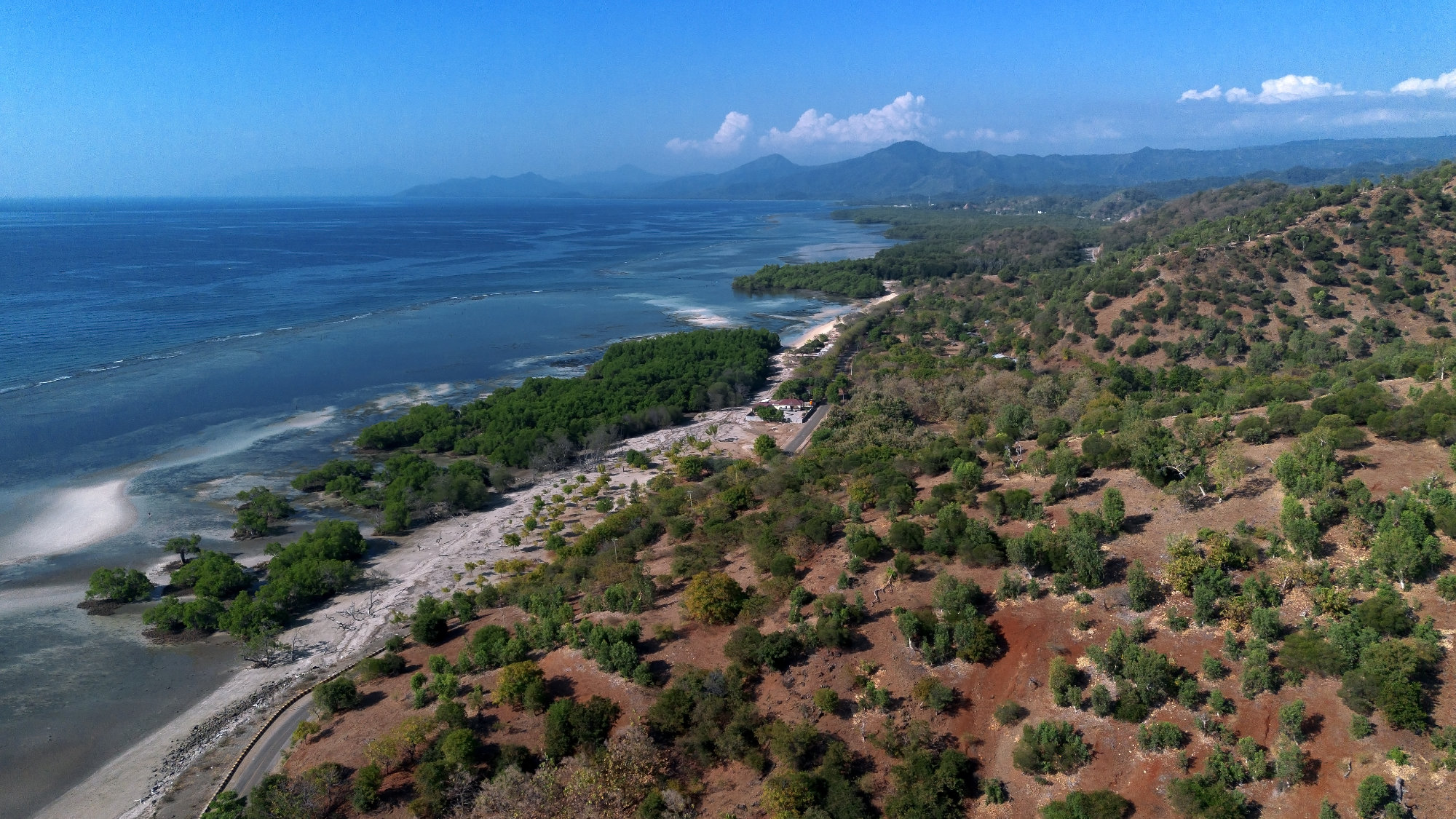
"The waters of Saleh Bay are relatively calm and protected from large waves, while also boasting high plankton productivity. Nutrient supplies from mangroves, seagrass beds, and coral reefs, combined with the consistent presence of lift nets that attract small fish and rebon shrimp, make Saleh Bay a stable natural 'dining table' for whale shark hatchlings in their critical growth phase," Iqbal explained.
Despite their extraordinary scientific potential, whale shark hatchlings in Saleh Bay also face significant risks, including entanglement in fishing nets, declining water quality due to coastal activity, and increased ship traffic, all of which pose serious threats to the survival of these highly vulnerable pups. Iqbal believes that survival rates in this early phase will significantly determine the future of the global whale shark population.
Based on these findings, Konservasi Indonesia plans to conduct further monitoring to confirm that these whale shark pups are regular and not accidental, expand the community-based reporting system, and advance plans to establish a whale shark-based MPA to protect this species and strengthen community-based conservation. Furthermore, the appearance of this whale shark pup was first observed by fishermen.
"This finding underscores the powerful role of local fishermen in modern, community-based conservation research. Reports from fishermen enabled researchers to respond quickly to the appearance of this extremely rare neonatal whale shark. Fishermen are the researchers' eyes at sea. They capture moments that are nearly impossible to detect with conventional scientific surveys," said Ismail Syakurachman. Lead Studies Program First Evidence of Neonatal Whale Sharks in Saleh Bay "Without their involvement, the earliest stages of whale shark life would likely remain hidden from science," he said.
About Conservation Indonesia
Konservasi Indonesia (KI) is a national foundation that aims to support sustainable development and environmental conservation in Indonesia. KI believes in the importance of multi-stakeholder partnerships that are cross-sectoral and cross-jurisdictional to support environmental conservation in Indonesia. Partnering with the Government and partners, KI designs and delivers innovative nature-based solutions, as well as integrated and sustainable landscape and seascape management strategies to generate long-term positive impacts for Indonesian society and nature. More information: www.konservasi-id.org
Media contactEvent and Media Engagement Manager, Konservasi Indonesia | Megiza | mmegiza@konservasi-id.org